

Grant providers refer to the groups or individuals who offer financial support without any expectations of reimbursement or ownership. In the case of nonprofits, universities, towns/cities and even for-profit organizations developing projects for public benefit, these groups decide whose ideas will be funded and whose will never see the light of day. Grant providers come from many different sources, including national governments, huge trusts with billions of dollars, local community trusts and the social responsibility departments of corporations. Knowing what motivates each type will help you stop writing generic letters.
Federal Grant Funders and Governmental Role
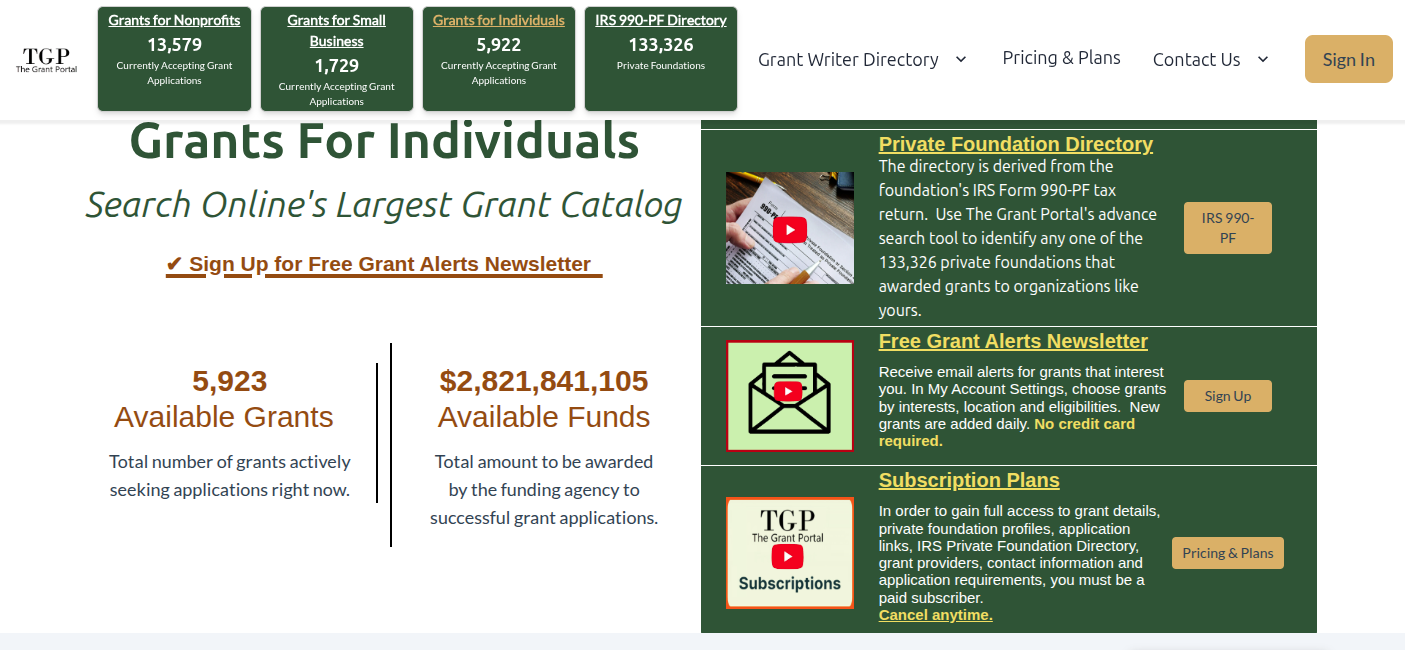
The biggest funders of grants within the U.S. are the federal government agencies. Together, NIH, DOE, NSF, DoD and USDA disburse tens of billions each year. These grants are linked to the Congressional mandate for improving health, energy independence, science prowess and economic competitiveness. Since there is tax money at play, federal grant funders demand high compliance standards, peer evaluation and transparency. There is a lot of red tape and long processes, but the amounts are life-changing for any organization. In order to keep track of available grant opportunities without being chained to Grants.gov all day, most people utilize a portal such as The Grant Portal.
State and Regional Grant Providers
State governments, economic development corporations, and regional authorities act as grant providers focused on local outcomes. Their priorities include job creation, infrastructure, workforce training, arts and rural development. Unlike federal programs, these grant providers often make decisions in 60 to 120 days and value letters of support from mayors, chambers of commerce, or school districts. Awards are smaller, typically $25,000 to $500,000, but they can be the bridge funding that makes a federal application viable later.
Grantmakers Through Private Foundations
These are grant makers who get their funding through private individuals or corporations. For instance, the Ford Foundation, Robert Wood Johnson Foundation, Hewlett Foundation and Bloomberg Philanthropies have several-year strategic plans in place. They do not need to remain neutral and can afford to experiment with policy change, storytelling or even innovation because the government will never touch it. Contacts determine access. The program officer will develop the idea jointly with a partner he trusts before issuing an RFP. Unless you fall within their strategic plans, you won’t even pass the initial selection.
Corporate Grant Providers and Strategic Alignment
Corporations operate grant providers through foundations or direct CSR budgets. Think Google.org, Walmart Foundation, JPMorgan Chase Foundation and Salesforce Foundation. Their giving aligns with business strategy, brand and ESG reporting. A bank might fund financial literacy. A cloud company might fund nonprofits adopting technology. These grant providers like measurable impact, employee volunteer tie-ins, and storytelling that reinforces corporate values. They move faster than government and often provide in-kind support — software, cloud credits, or pro bono expertise — alongside cash.
Community Foundations: Local Grant Providers With Deep Roots
Community foundations are place-based grant providers that pool donations from local residents and re-grant them to nonprofits in the region. The Chicago Community Trust, Silicon Valley Community Foundation and Boston Foundation know their ecosystems intimately. They fund general operating support, capacity building, and emergency response — categories national funders often avoid. Because they’re relationship-driven, showing up at community events and serving on local coalitions matters as much as your written proposal.
Family Foundations and Donor-Advised Funds
Tens of thousands of family foundations act as quiet grant providers, writing checks from $5,000 to $250,000 with minimal bureaucracy. Many don’t have websites or staff. Decisions are made by trustees at quarterly meetings. Donor-advised funds housed at Fidelity Charitable, Schwab Charitable, and community foundations also direct billions each year. These grant providers are hard to discover through search engines alone, which is why databases that aggregate 990 tax filings are essential for prospecting.
International and Multilateral Grant Providers
For global work, the landscape expands to multilateral grant providers like the World Bank, Global Fund, Green Climate Fund and UN agencies. Bilateral aid agencies such as USAID, GIZ and UK FCDO also fund NGOs and social enterprises. Their priorities map to the Sustainable Development Goals and require host-country collaboration, robust monitoring and evaluation and financial controls. Applications are complex and often require consortiums, but successful awards can sustain multi-year programs across countries.
Universities and Intermediaries as Pass-Through Grant Providers
Large research institutions frequently receive prime awards and then sub-award to partners. In that case, the university becomes your grant provider, with terms that flow down from the federal sponsor. Similarly, intermediary organizations like Rebuild by Design, Blue Meridian Partners or community development financial institutions re-grant pooled capital to local groups. Working through an intermediary can reduce administrative burden and open doors to funders you couldn’t access directly.
What Grant Providers Evaluate Before Saying Yes
Despite their differences, most grant providers score applications on similar factors: alignment with mission, clarity of the problem, strength of the approach, qualifications of the team, feasibility of the timeline, reasonableness of the budget and ability to measure outcomes. Federal panels use technical reviewers. Foundations use program staff and outside experts. Corporate grant providers may include marketing and HR in decisions. Your job is to make scoring easy by mirroring their language and criteria in your narrative.
Compliance and Stewardship Expectations
Every grant provider expects accountability. Federal funders require financial reports, progress reports and adherence to 2 CFR 200. Foundations want impact data, stories, and lessons learned. Corporate funders want logo placement, media mentions and employee engagement metrics. Missed deadlines, unapproved budget changes or poor communication will damage your reputation. Grant providers talk to each other and a reputation for strong stewardship becomes a competitive advantage.
Common Mismatches Between Applicants and Grant Providers
The fastest way to waste time is applying to the wrong grant provider. Examples: asking a research-focused foundation for general operating support, pitching a local project to a funder that only works internationally or requesting capital expenses from a grant provider that only funds programs. Another mismatch is size — a $10M foundation won’t entertain a $5M request, and a $50K family fund can’t anchor your $2M campaign. Read the funder’s 990, annual report and recent grants list before you write.
Building Trust With Grant Providers Over Time
Transactional fundraising doesn’t work at scale. The strongest organizations treat grant providers as long-term partners. That means introducing yourself before you need money, inviting program officers to site visits, sharing results even when they’re messy, and thanking them when you lose. Ask for feedback on declined proposals and actually incorporate it. Over years, this behavior compounds. Funders start calling you when new opportunities open because they trust you to deliver.
Tools That Help You Identify the Right Grant Providers
The universe of grant providers is vast and constantly changing. Manual research can’t keep up. Prospecting platforms aggregate foundation 990s, federal opportunities and corporate giving data so you can filter by geography, issue area and funding history. Using a hub like The Grant Portal helps you build a pipeline of aligned grant providers instead of chasing every deadline you see on Twitter.
Red Flags to Watch for When Vetting Grant Providers
Not all money is good money. Some grant providers have reputational issues, pay 12 months late or require reporting so burdensome it costs more than the grant. Others insert restrictions that would distort your mission. Review their past grantees, talk to peers, and calculate the true cost of compliance. A $100,000 grant that requires two full-time staff to manage isn’t a win. Strategic nonprofits decline misaligned funding to protect their focus.
Working With Grant Providers as Strategic Partners
Grant providers ultimately want the same thing you do: solvable problems to get solved. When you treat them as partners rather than ATMs, you unlock more than money — you gain credibility, networks, and insight. Approach each conversation with clarity on how your work advances their mission and be honest about what you need to succeed. That’s how lasting funding relationships are built, and how bold projects get the resources they deserve.