


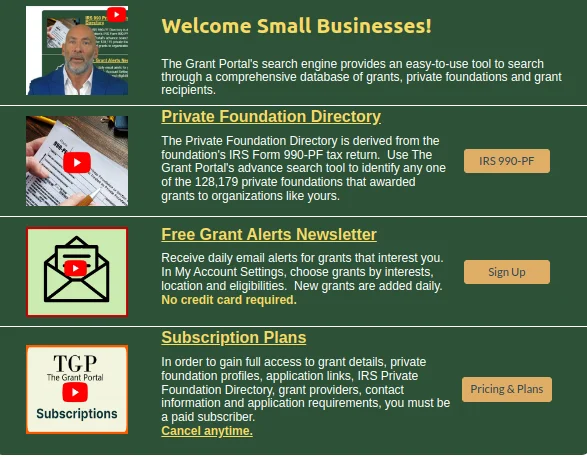
The establishment or expansion of a firm may involve getting more funds to operate and a grant for small business can be a good source of such money which does not have to be returned to the donor. In contrast to conventional bank loans, grants are intended to enable businessmen to buy some equipment, develop technology, hire employees, market their products or services and grow the business. If you start a new business or plan to expand the one you currently run, learning about grants will greatly enhance your chances to get funds. Websites such as The Grant Portal offer a great opportunity to learn about grants.
Why Small Business Grants Matter
Small businesses are essential to economic growth, innovation, and job creation. However, many entrepreneurs struggle to secure the funding needed to compete in today’s marketplace. Grants offer a unique opportunity because they provide financial assistance that generally does not require repayment. This allows business owners to invest confidently in growth initiatives without increasing debt. Grant funding can help purchase equipment, improve operations, expand into new markets, train employees, or launch innovative products and services. For startups and established businesses alike, grants can serve as a catalyst for sustainable long-term success.
Types of Small Business Grants
Business owners have access to a wide variety of grant programs depending on their industry, location, and business objectives. Federal government grants often support research, technology, manufacturing, agriculture and innovation. State and local governments provide funding to encourage economic development and job creation within their communities. Private foundations and nonprofit organizations frequently sponsor grants for minority-owned, women-owned, veteran-owned and environmentally focused businesses. Large corporations also offer grant competitions and business development programs designed to encourage entrepreneurship. Understanding these different funding sources helps businesses identify opportunities that closely match their goals.
How to Find the Right Grant Opportunities
Finding the right grant requires careful research and planning. Business owners should begin by identifying their funding needs, project goals, business structure, and eligibility requirements. Searching multiple funding sources manually can be time-consuming, which is why many entrepreneurs rely on comprehensive grant databases. Platforms like The Grant Portal simplify the process by organizing thousands of grant opportunities according to industry, location, business type and funding purpose. Regularly reviewing available opportunities and maintaining a grant application calendar helps ensure important deadlines are never missed while maximizing funding potential.
Preparing a Winning Grant Application
A successful grant application clearly explains why funding is needed and how the money will be used. Strong proposals include a detailed business overview, measurable objectives, realistic financial projections and a comprehensive project budget. Grant reviewers want evidence that the business has a clear strategy, responsible financial management and the ability to achieve meaningful results. Supporting documentation such as financial statements, business plans, licenses and market research strengthens the application. Carefully following submission guidelines and tailoring each proposal to the specific grant program significantly improves approval chances.
Mistakes to Avoid in Grant Proposals
Many applications are rejected because of preventable errors rather than poor business ideas. Missing deadlines, incomplete documentation, unrealistic budgets, and failing to meet eligibility requirements are among the most common reasons applications are denied. Generic proposals that are not customized for each funding opportunity also reduce competitiveness. Business owners should carefully review every requirement before submitting an application and ensure all requested materials are complete and accurate. Proofreading the proposal and verifying supporting documents demonstrate professionalism and increase confidence among grant reviewers.
Using Grant Funding Effectively
Receiving grant funding is only the beginning of the process. Businesses should use awarded funds responsibly according to the grant agreement while maintaining detailed financial records. Investments may include purchasing equipment, expanding facilities, hiring employees, improving technology, launching marketing campaigns or developing new products. Tracking measurable outcomes helps demonstrate success and satisfies reporting requirements established by grant providers. Responsible grant management also builds credibility, increasing the likelihood of qualifying for additional funding opportunities in the future.
Future Trends in Small Business Grant Programs
Grant opportunities continue to evolve alongside changes in technology, sustainability and economic priorities. Many funding organizations now focus on innovation, clean energy, digital transformation, workforce development and underserved communities. Entrepreneurs who embrace modern business practices, maintain accurate financial records and demonstrate measurable community or economic impact often remain more competitive. Online grant platforms have also made discovering funding opportunities faster and more accessible than ever before. Staying informed about emerging funding priorities allows businesses to position themselves for future success.
Growing Your Business with the Right Funding Strategy
A successful funding strategy combines grants with other financial resources such as business revenue, investments, partnerships and responsible financing. Rather than depending on a single funding source, entrepreneurs benefit from building a diversified financial plan that supports both short-term operations and long-term expansion. Continuously improving business plans, monitoring available funding opportunities and strengthening grant-writing skills can increase success over time. Businesses seeking a reliable grant for small business can use The Grant Portal to discover funding opportunities that align with their goals, helping them secure the resources needed for sustainable growth and long-term success.
Frequently Asked Questions
What is a grant for small business?
A grant for small business is financial assistance provided by government agencies, corporations, foundations or nonprofit organizations that does not usually require repayment, provided all grant conditions are met.
Who can apply for small business grants?
Eligibility depends on the grant program. Many grants are available for startups, existing businesses, women-owned businesses, minority-owned businesses, veteran-owned businesses, rural businesses and nonprofit organizations with business initiatives.
Do I have to repay a business grant?
In most cases, no. Grants generally do not require repayment as long as the funds are used according to the grant agreement and reporting requirements.
Where can I find legitimate small business grants?
Business owners can search government agencies, private foundations, corporate grant programs and trusted funding databases such as The Grant Portal.
What documents are usually required for a grant application?
Common requirements include a business plan, financial statements, tax information, project budget, licenses and a detailed proposal explaining how the funding will be used.
How can I improve my chances of receiving a grant?
Research eligibility carefully, submit a complete application, customize every proposal, provide accurate financial information and clearly explain the project’s expected outcomes and community or business impact.